Spinal surgery
Our Services
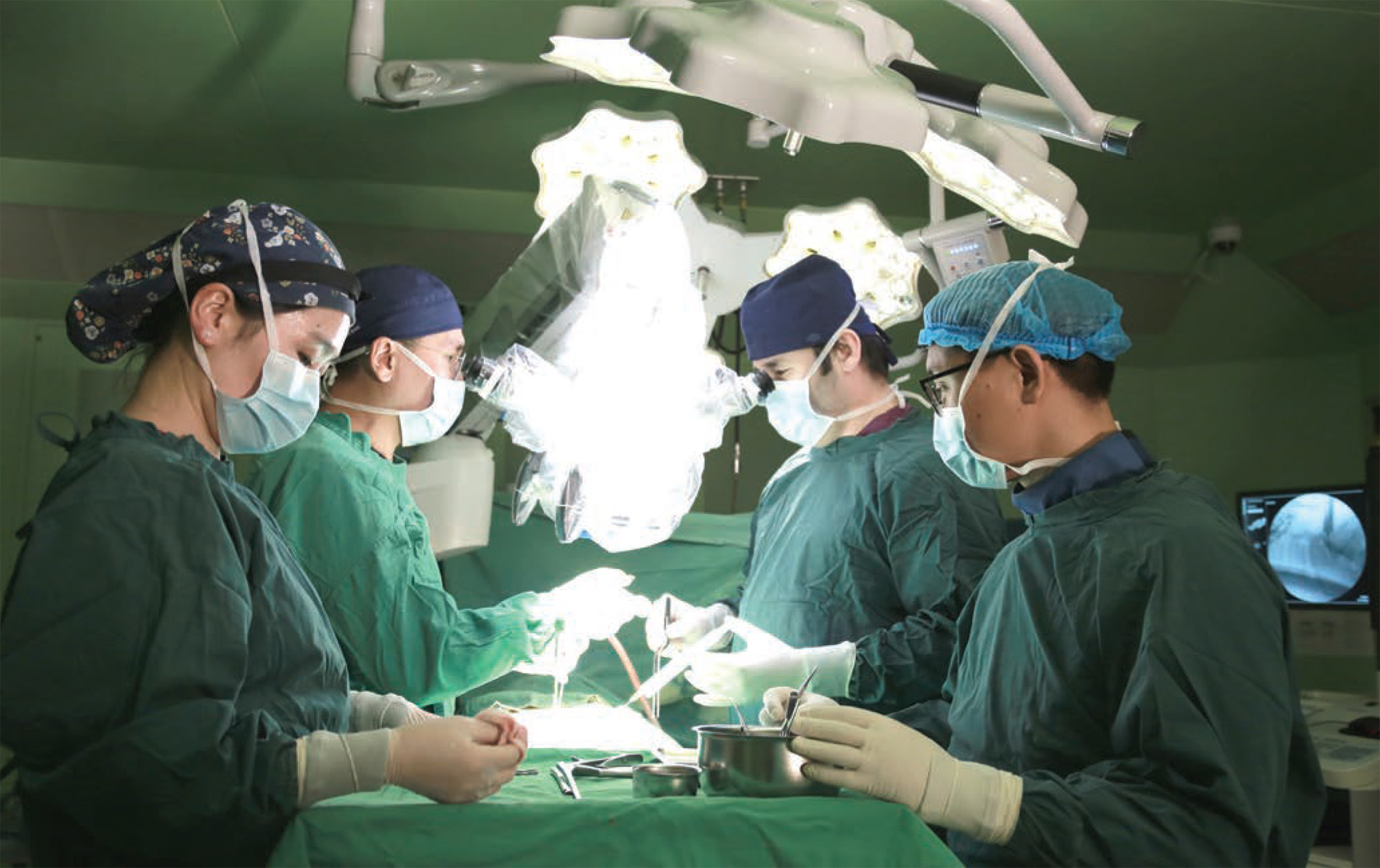
Since 2012, Grandmed Hospital has been pioneering complex minimally invasive surgeries in Mongolia, including "SPINAL DISC REPLACEMENT", "FIXATION OF VERTEBRAL FRACTURE", "VERTEBRAPLASTY", "SPINAL CORD TUMOR SURGERY", "CERVICAL DISC REPLACEMENT" successfully implementating surgeries to relive “Decompression of Nerve” which was on the "List of Incurable Diseases” in Mongolia.
Furthermore, since 2016, they introduced the PELD method for initial endoscopic spinal surgery, the PSLD method for endoscopic spinal surgery in 2018, and the PSCD minimally invasive cervical endoscopic surgery method in 2020. Currently, they have successfully performed over 3000 minimally invasive spinal surgeries. Since 2018, the Specialised Spinal Surgery team at Grandmed Hospital has become the 4th country in the world to successfully introduce and implement new endoscopic spinal surgery. They are the 1st country in the world to perform Spinal Disc Replacement Surgery without risk and the 2nd country in the world to successfully implement Cervical Endoscopic Surgery in Mongolia for the fi rst time since 2020.
Advantages of minimally invasive and endoscopic spinal surgery
- SMALL INCISION
- LESS DAMAGE TO VESSELS, NERVES AND MUSCLES
- SHORTER HOSPITAL STAYS
- FASTER WOUND HEALING
- LOWER RISK OF INFECTION
- LESS POST-OPERATIVE PAIN
- FASTER RECOVERY OF WORKING ABILITY
- POSSIBILITIES TO PERFORM ON ELDERLY PATIENTS
Types of Surgical Procedures Performed








Үйлчилгээний тухай
In 2024, the World Endoscopic Spinal Surgery Association selected and accredited Dr. BABAN NURBYEK of Grandmed Hospital as one of the best "Instructor Trainers" at the international level. As a result, he has been invited to international scientifi c conferences as an “instructor trainer”, where he lectures and leads practical training.
He has begun to be invited as an " Instructor Trainer " to international scientifi c conferences on Endoscopic spinal surgery in highly developed countries such as the USA, South Korea, India, Japan, and Taiwan, where he lectures and leads practical training. Grandmed Hospital is a leading and recognised worldwide for minimally invasive spinal surgery.
Today, Grandmed Hospital's "Spine Project" is implementing commendable work for the health of Mongolians, stopping the flow of thousands of citizens travelling abroad for treatment, reducing the economic risks associated with health issues, and creating opportunities for people to receive reliable treatment and recover with confi dence in their home country.